Home  /  Services  /  LED Conversion

LED Landscape Lighting Conversion in Palm Bay, FL

Palm Bay Landscape Lighting converts older halogen low-voltage systems to LED for homes across Palm Bay, Melbourne, and nearby Brevard County. Conversion cuts total power draw by a large margin, reduces heat inside the fixtures, extends lamp life from months to years, and often frees up transformer capacity so more fixtures can be added without a second transformer. Many conversions happen alongside a repair visit — once the system is opened up and inspected, moving to LED is usually the more sensible long-term choice.
Why Homeowners Convert to LED

  • Lower power draw. LED lamps use a fraction of the wattage of the halogens they replace, which lets a single transformer power more fixtures than it could before.
  • Cooler fixtures. Halogens run hot enough to shorten socket life and cook seals. LED lamps run cool, which means fewer socket failures and longer-lasting fixtures.
  • Longer lamp life. A halogen lamp in a Palm Bay path light might last a year or two. Comparable LED lamps run for many years without changes.
  • Room to grow the system. The wattage saved by converting is transformer capacity that can be used to add new zones later — pool area, back patio, additional tree uplighting.
  • Consistent color. Quality LED lamps in warm color temperatures (2700K–3000K) match the look of halogen without the maintenance.
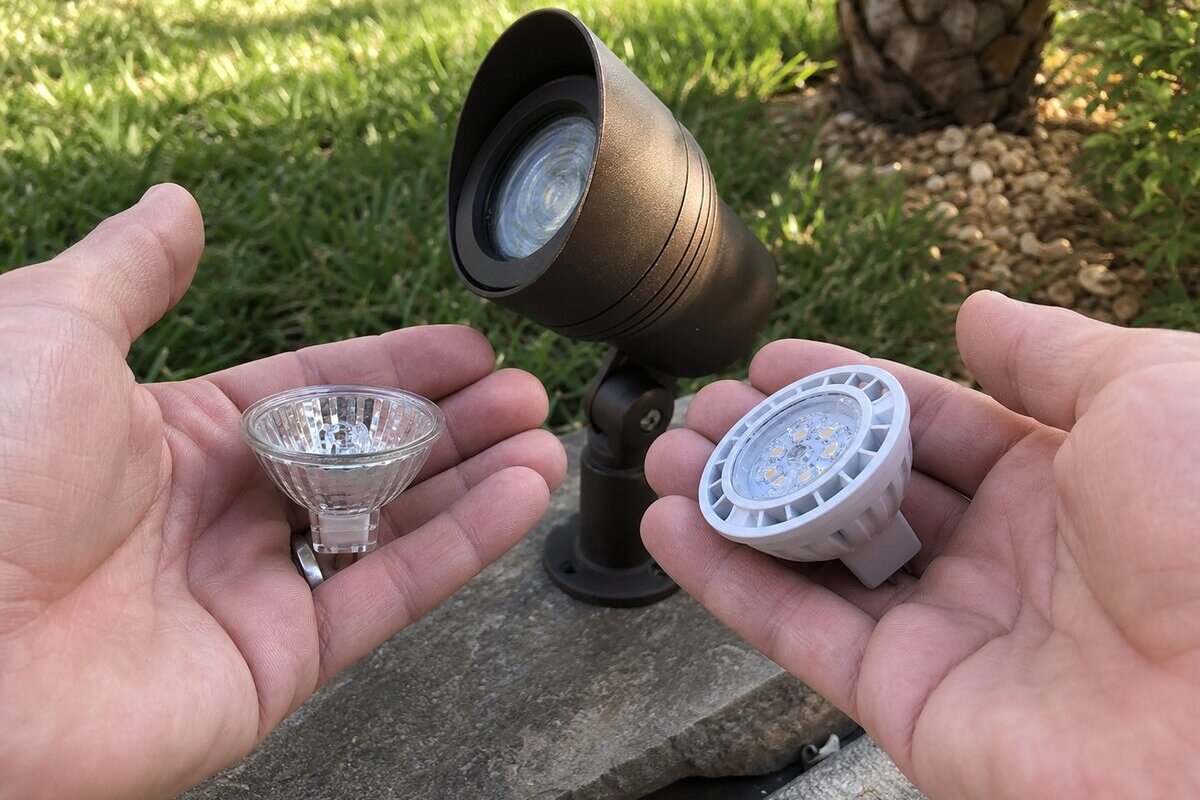
Halogen landscape lighting lamp and LED replacement lamp held near an outdoor fixture in a Palm Bay backyard

What a Conversion Actually Involves

A conversion is more than a lamp swap. Here's what a proper LED conversion covers.

Lamp replacementEvery halogen lamp gets swapped for an LED equivalent matched to the fixture and the intended color temperature — usually 2700K for warm entry and path lighting.
Socket inspectionSockets are checked for corrosion and pitting. Corroded sockets don't hold LED lamps reliably, so they get cleaned or replaced during the conversion.
Connection checkSplices and hub connections are inspected. Lower LED loads can expose bad connections that halogen loads were masking.
Transformer verificationThe transformer is checked for compatibility with the new load. Most modern low-voltage transformers handle LED loads well, but a few older magnetic units need a low-load workaround or replacement.

When Conversion Is the Right Move

If the underlying fixtures are already failing, a full fixture-and-lamp replacement often makes more sense than a lamp-only conversion. That's a conversation to have during the scope call.

LED Conversion FAQs

Will LED lamps work in my existing halogen fixtures?

In most cases, yes. Standard low-voltage fixtures accept LED lamps in the same base sizes (MR16, MR11, G4, bi-pin wedge) that were used for halogen. Some very old sealed fixtures don't accept lamp changes at all — those need full fixture replacement.

Will the light look different after conversion?

With warm color-temperature LED lamps (2700K or 3000K), the look is very close to the original halogen — warm, inviting, and appropriate for landscape use. Cooler LED lamps look bluish and are generally not used for residential landscape lighting.

Can conversion happen alongside a repair visit?

Yes, and it often does. If a repair visit is already opening up the system to fix a wiring or transformer issue, converting the lamps at the same time saves a separate trip and gets the whole system on the same maintenance cycle.

Do I need a new transformer for LED?

Usually not. Most low-voltage transformers handle LED loads without modification. A few older magnetic units need a minimum-load workaround, and some homeowners choose to upgrade the transformer anyway to gain smart-home or astronomical-timer features.

Ready to Get Started?

Call for repair questions or a quick scope conversation, or send the quote form for installation and design work.