Palm Bay Landscape Lighting repairs low-voltage outdoor lighting systems across Palm Bay, Melbourne, and nearby Brevard County. Repair calls usually come in when a whole zone has gone dark, when the transformer keeps tripping after storms, when fixtures have dimmed to the point of not doing their job, or when landscaping and irrigation work has cut a wire run. Most repair visits can be scoped and ballparked over the phone once you describe what stopped working and roughly when — the diagnostic work itself happens on-site once the visit is scheduled.
Palm Bay's climate is hard on outdoor lighting. Most repair calls trace back to one of these underlying causes.
Most repair calls are scoped and ballparked by phone before scheduling — describe what stopped working and when, and that's usually enough to know what to expect.
Yes. Most repair calls are on systems installed years ago by another company or by a previous homeowner. Common fixes include corroded connections, cut wire runs, failed sockets, and undersized or water-damaged transformers. The brand of the original system rarely matters — the components are largely interchangeable.
When multiple fixtures fail at once, they almost always share a wire run or a transformer tap. A single corroded splice, a nicked wire, or a tripped circuit on the transformer can drop an entire zone while the rest of the system keeps working. That pattern actually makes the repair easier to trace than a single random failure.
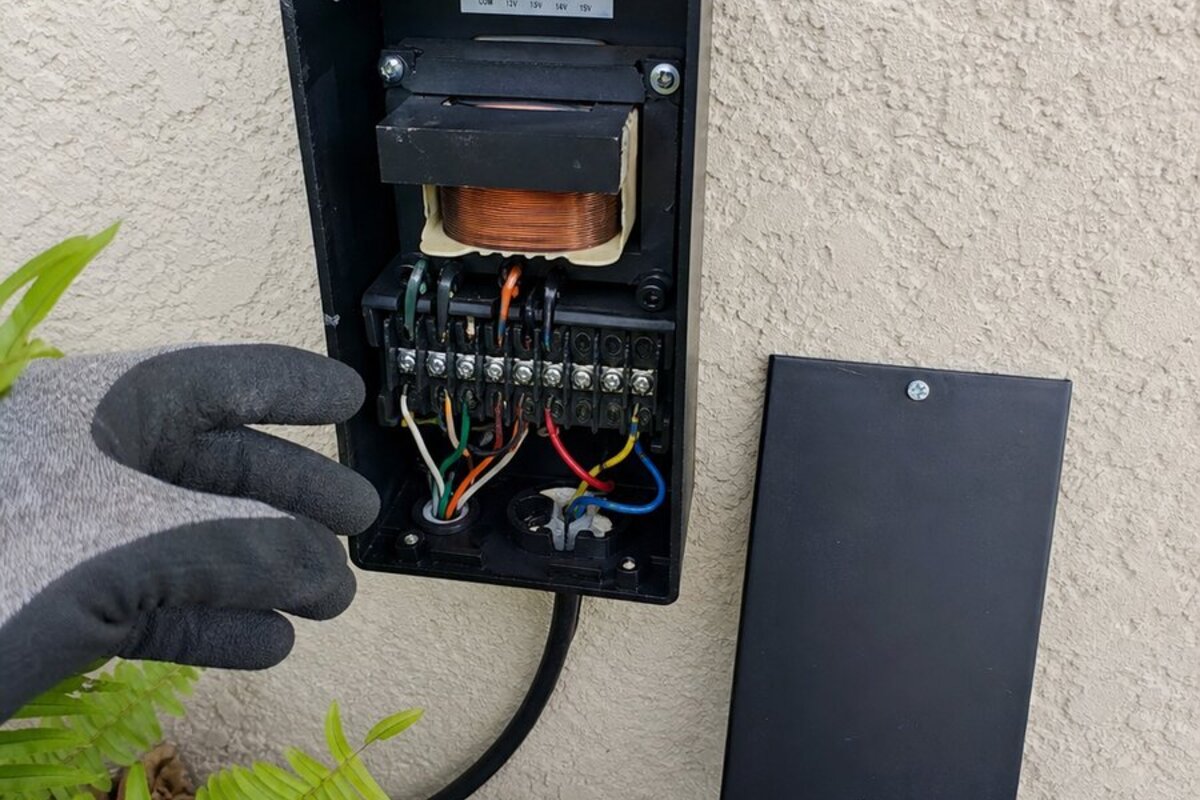
Not usually. Many transformer problems are actually downstream shorts that trip the transformer's protection circuit — fixing the short brings the transformer back to normal. Full transformer replacement is more likely when the unit is very old, has taken water damage, or was undersized from the start.
Sometimes. If the fixtures are solid brass or high-quality cast, converting to LED lamps and fixing the wiring often gets another decade out of the system. If the fixtures are cheap aluminum and already corroded, replacement usually costs less over time than repeated repairs.
Most single-issue repairs are a few hours on-site. Whole-system diagnostics and rewires take longer. The phone conversation before scheduling usually gets you close to the actual time and cost.
Call for repair questions or a quick scope conversation, or send the callback form for installation and design work.